
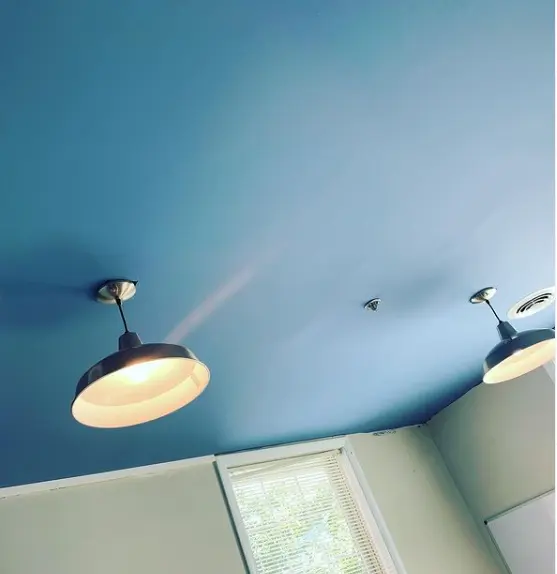
Cedar Hill is a town of about three hundred people on U.S. Route 41, and it grew up around a railroad depot built after the Louisville and Nashville line came through in 1858. Houses here are older and smaller than the ones in the fast-growing suburbs, and they tend to have the traits that come with age: low ceilings, small windows, wood trim that has been painted many times and walls that are a patchwork of repairs.
Painting those rooms is satisfying work, because the difference is easy to see. This page explains how we approach it, what we do to make small rooms feel larger and brighter, how we handle the surfaces you find under old paint and why we encourage customers out here to bundle a few jobs into one trip.
Making small rooms feel bigger without moving a wall
Small rooms with small windows can feel closed in, especially in winter. Color and finish do a lot of the work. A warm white or pale neutral on the walls, a true white on the ceiling and a satin or eggshell finish that catches a little light all make a room feel more open. Painting the trim the same color as the walls, in a slightly higher sheen, is a classic trick that blurs edges and adds height.
We test a sample on the darkest wall and the brightest wall, because the same paint looks different in each. In a house with one good window per room, that matters.
What lives under the paint in an old house
Walls in older Cedar Hill houses can be plaster, early drywall, beadboard or board paneling, sometimes in the same room. Each takes paint differently. Plaster needs flexible repairs. Early drywall may have wide, soft seams. Beadboard needs its grooves cleaned and filled. Paneling needs a bonding primer. We identify what you have before choosing products, so the finish does not peel.
Houses built before the late 1970s may have lead in older paint layers. We keep prep gentle, contain the work and clean thoroughly, and we explain the plan beforehand.
Railroad-town houses and their quirks
Towns built around a depot grew in tight blocks, and homes close to the tracks sometimes pick up dust and vibration that open cracks more often. If you are near the rail line, expect hairline cracks to return unless they are repaired flexibly. We open them slightly, tape where needed and fill with a flexible compound, which holds up better than rigid spackle.
Ceiling seams and corners are common trouble spots, and we pay special attention to them.
Bundling jobs into one trip
Because we drive out from Greenbrier, we make each visit count. We encourage customers to combine a repaint with small repairs: a patched ceiling, a swapped door lock, a replaced length of trim, a loose handrail. We quote the whole list and schedule in one block. You pay for fewer trips, and the house comes out of it looking finished rather than half done.
Houses changing hands in a small town
Small towns see houses pass between families and onto the market. Painting is the fastest way to prepare one. A clean, neutral palette, repaired walls and fresh trim make an older house show far better. We prioritize the rooms that matter most and are honest about what is not worth the money.
What drives the cost of a small-house repaint
Because the rooms are small, wall area is modest, but repairs often dominate: plaster cracks, paneling, beadboard and old trim all add time. We quote by room so you can see where the work is and decide what to do now.
A first-call checklist for out-of-town estimates
When you call, have the address, the number of rooms, the age of the house if you know it and a few photos ready. Tell us about any leaks, past repairs or pets. We use that to bring the right materials and to decide whether one visit will cover the estimate and any small repairs. It also lets us give you an honest idea of timing before we make the drive.
Cedar Hill history behind these older rooms
These are real places in and near Cedar Hill. They explain the age of the town and the kind of houses a painter finds there.
- Camp Cheatham markerA state historical marker at U.S. 41 and Sory Street, a sign of how long the town has been on this road.
- L&N depot historyThe town was built after the railroad was completed in 1858 and a depot was erected.
- Red River Church markerA marker roughly four miles away, part of the older settlement around town.
- Fort Redmond markerAnother nearby marker that shows how deep the area's history runs.
- Bell Witch CaveIn nearby Adams, a regional landmark that draws visitors to northwest Robertson County.
- Port Royal State Historic ParkIn Adams, an early flatboat port on the National Trail of Tears Historic Trail.
How we schedule Cedar Hill painting
A small room with repairs takes a day or two. A whole small house may take a week. We schedule Cedar Hill estimates in blocks with other nearby jobs, so call early and give us a few date options. Interior work is comfortable year-round, and winter is often the easiest time to get on the calendar.
Cedar Hill interior painting questions
How do I make a small room feel bigger?
Light, warm neutrals, a clean white ceiling and a satin or eggshell finish help. Matching trim to walls can add height.
Can you paint beadboard or paneling?
Yes, with the right prep and primer.
Why do cracks keep returning near the tracks?
Vibration and seasonal movement reopen rigid patches. Flexible repairs hold better.
Will you travel to Cedar Hill?
Yes. We are based in Greenbrier and serve northwest Robertson County.
Can I bundle small repairs with painting?
Yes, and we recommend it.
We will make the drive
Call (615) 686-7495 for a free interior painting estimate in Cedar Hill.
Also painting interiors in Springfield, Cross Plains and Greenbrier. All about interior painting · Everything we do in Cedar Hill